Dental Article
The Ultimate Daily Denture Cleaning Routine
To keep your dentures clean and smelling fresh, follow this three-step daily process.
Schedule Free Consultation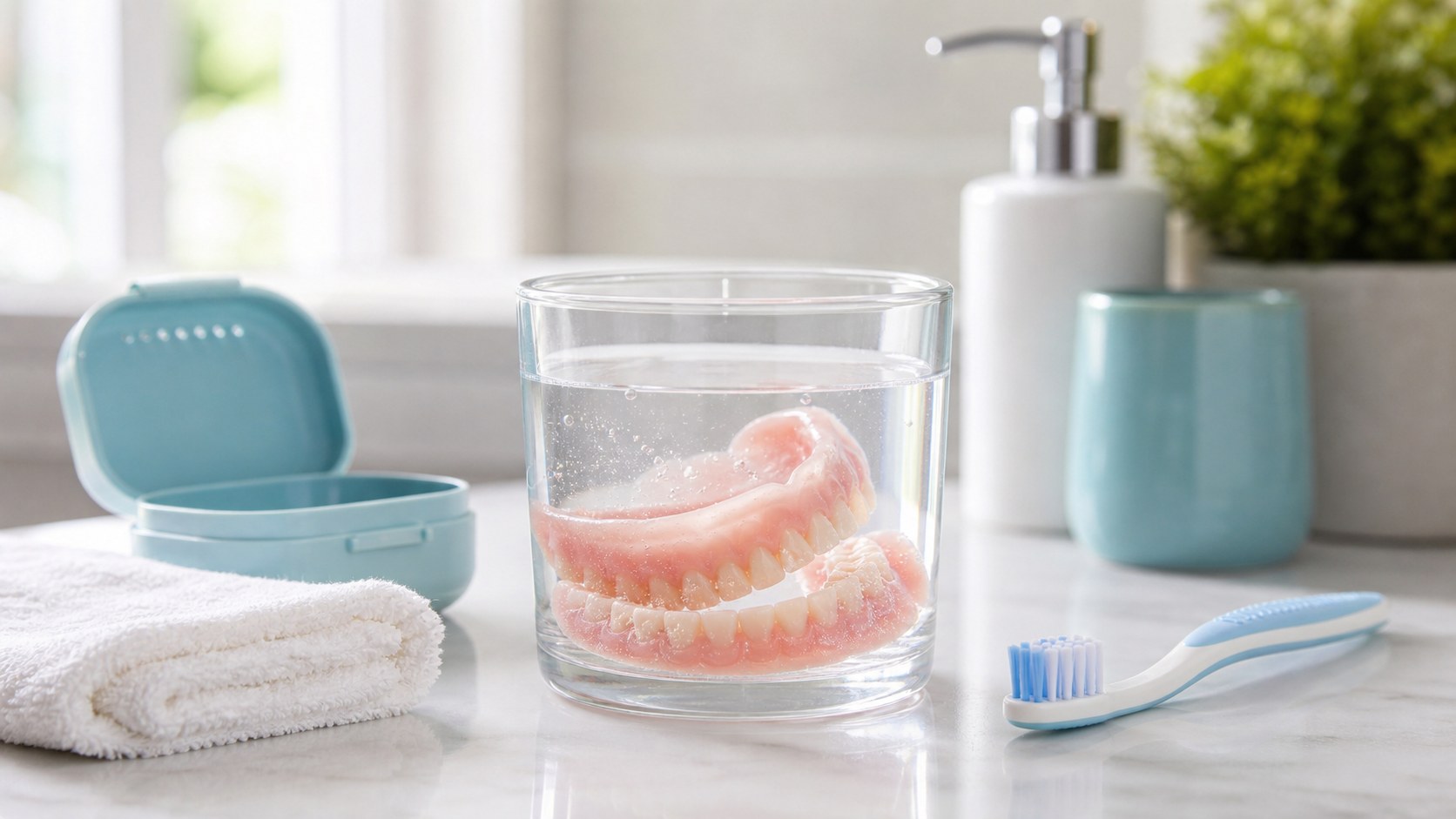

1. Rinse After Every Meal
The simplest way to prevent plaque and tartar buildup is to rinse your dentures under lukewarm water after eating.
Pro Tip: Always fill the sink with water or place a soft towel in the basin. Even the strongest dentures can chip if dropped on a hard porcelain surface.
2. The Daily Brush (The Right Way)
You must brush your dentures at least once a day to remove biofilm—the sticky layer of bacteria that causes odor and gum irritation.
Avoid Regular Toothpaste: Traditional toothpastes are too abrasive. They create microscopic scratches in the acrylic that harbor bacteria and dull the finish.
What to Use: Use a specialized denture brush and a non-abrasive cleanser, mild dish soap, or a dedicated denture cleaner such as NuDent, Renew or Polident.
Technique: Gently scrub all surfaces, paying extra attention to the areas that touch your gums, where denture adhesive can linger.
3. The Essential Overnight Soak
Never let your dentures dry out. Most dentures are designed to stay moist to maintain their shape and prevent warping.
Storage: Place them in a container with cool water or a mild denture-soaking solution.
Give Gums a Rest: Sleeping without your dentures allows your gum tissues to breathe and recover from the pressure of daily wear, preventing infections like denture stomatitis.
Natural Solutions for Stubborn Tartar
If you notice hard, white mineral deposits (calculus/tartar) that won't brush away, you can use these safe, at-home methods:
Vinegar Soak: A 50/50 mix of warm water and white vinegar can help dissolve tartar. (Note: Only do this for 30 minutes if you have partial dentures with metal clasps to avoid corrosion).
Baking Soda Paste: A paste of baking soda and water is a gentle way to lift surface stains and neutralize odors without scratching the material.
What to Avoid: The "Denture No-Go" List
To protect your warranty and the structural integrity of your teeth, stay away from:
Boiling Water: Extreme heat will warp the acrylic, ruining your custom fit instantly.
Bleach: Household bleach can turn the pink, natural-looking "gum" part of your denture white and make the material brittle.
DIY Scraping: Never use a knife or a sharp tool to "pick" at tartar. This leads to deep gouges that require a professional repair.
Professional Care: When to Visit MyBite
Even with perfect home care, professional maintenance is required to keep your smile in peak condition.
Professional Cleaning: Every 6–12 months, our on-site labs can perform an ultrasonic cleaning to remove deep stains and hardened tartar that home brushing can't touch.
Annual Exams: We check the "bite" and fit. If your dentures feel loose despite being clean, you may be a candidate for a denture reline.
—----------------------------------------------------------------------------------------------------------------------------
How Long to Adjust to New Dentures? Your 30-Day Calgary Success Guide
In 2025, one of the most common questions our patients ask is: "How long will it take for my new dentures to feel normal?"
The transition to dentures is a journey, not an overnight event. At MyBite, we can use advanced Digital Denture technology to shorten this learning curve, but your mouth still needs time to adapt to its new "roommate."
Here is the 30-day timeline of what to expect, backed by clinical insights and MyBite’s specialized process.